ABOUT / ARTIST STATEMENT
Li Hui Tsai is a contemporary artist based in Taiwan, working primarily in oil painting and watercolor. She travels frequently throughout the UK, particularly to London, where she received her PhD, maintaining an ongoing connection with Britain’s artistic and intellectual life.
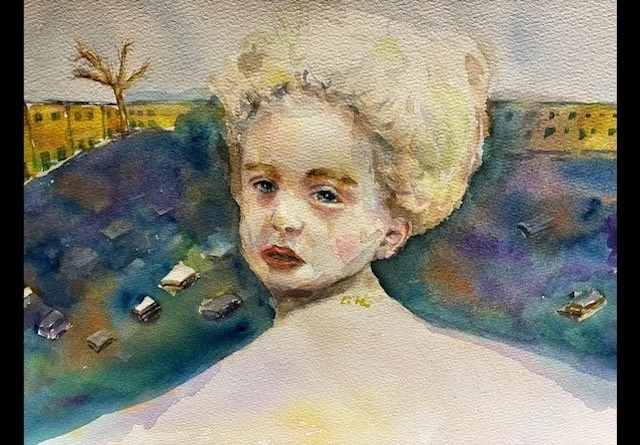
Her practice explores the relationship between memory, imagination, and freedom, with a particular interest in the human figure and the space between perception and experience. She sees memory not as a fixed record of the past, but as something fluid—reshaped by imagination, emotion, and the passage of time. Her paintings move between reason and feeling, observation and imagination, the visible and the unseen, allowing ambiguity and intuition to coexist with the rational.
Her work is informed by an engagement with creative freedom and the traditions of Romanticism, particularly its emphasis on imagination, feeling, individual experience, and ways of understanding the world beyond reason alone.
She shares her birthday with William Blake. What began as a simple coincidence became a personal point of connection and encouraged a deeper engagement with his work. She is drawn to Blake’s ideas of imagination, perception, and the relationship between the visible and the visionary. Rather than illustrating his poetry or reproducing his imagery, she considers his work as part of an ongoing dialogue with the possibilities of imagination and artistic freedom.
With a background in literary and art criticism, Li Hui brings a sensitivity to language, imagery, symbolism, and the construction of meaning. In painting, these concerns become colour, form, atmosphere, and gesture. Working from Taiwan while maintaining a strong connection with Britain, she transforms these influences through her own contemporary perspective.
Following a group exhibition in Taiwan in 2025, Li Hui continues to develop her painting practice across these cultural and intellectual contexts. At the heart of her work is a continuing exploration of how memory becomes imagination, how feeling reshapes perception, and how creative freedom emerges through transformation.